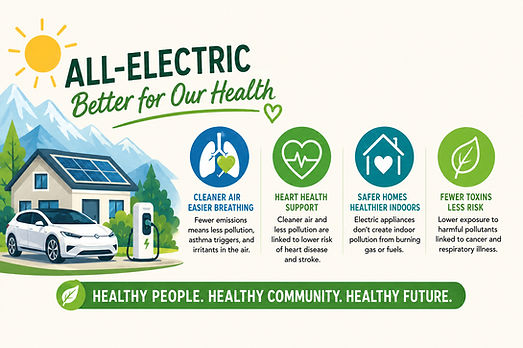
What are the health benefits of living an all-electric lifestyle?
Living and all-electric lifestyle can provide several health benefits, particularly by reducing exposure to indoor and outdoor air pollution. The benefits vary depending on how a home is heated, cooked, and powered, but there is growing evidence that replacing combustion appliances with electric alternatives can improve indoor air quality and reduce certain health risks.
1. Cleaner Indoor Air
One of the biggest benefits comes from eliminating or reducing indoor combustion.
Gas stoves, gas furnaces, propane heaters, and other fuel-burning appliances can release pollutants such as:
• Nitrogen dioxide (NO₂)
• Carbon monoxide (CO)
• Fine particulate matter (PM2.5)
• Formaldehyde (from some combustion processes)
Electric appliances do not produce these combustion byproducts inside the home.
2. Reduced Asthma and Respiratory Problems
Children living in homes with gas stoves have been found in many studies to have a higher likelihood of asthma symptoms than children in homes that use electric cooking, although asthma has many contributing factors.
Switching to induction or electric cooking, along with
proper kitchen ventilation, can help reduce exposure to
pollutants that irritate the lungs.
Benefits may include:
• Fewer asthma triggers
• Less coughing and wheezing
• Better lung health
• Improved breathing for sensitive individuals
For more information, click on the links below:
Health warning labels on gas stoves in Colorado
3. Lower Risk of Carbon Monoxide Poisoning
Carbon monoxide is an odorless, colorless gas produced by incomplete combustion.
Electric appliances eliminate this source of carbon monoxide, reducing the risk of accidental exposure from malfunctioning furnaces, water heaters, or gas ranges.
4. Improved Home Comfort
Many all-electric homes use high-efficiency heat pumps, which can:
• Maintain more consistent indoor temperatures
• Reduce cold and hot spots
• Provide both heating and cooling
• Improve humidity control when properly installed
These features can contribute to better sleep and greater overall comfort.
5. Better Air During Wildfire Season
Modern heat pump systems paired with high-efficiency air filters can help reduce the amount of wildfire smoke particles entering and circulating within a home when operated appropriately. In regions prone to wildfire smoke, this can improve indoor air quality during poor outdoor air quality events.
6. Reduced Exposure to Gas Leaks
Gas appliances and piping can occasionally leak natural gas or propane. While utility gas is odorized to help detect leaks, electric appliances avoid these combustion fuel systems altogether.
7. Quieter Living Environment
Electric technologies often operate more quietly than combustion equipment.
Examples include:
• Heat pumps
• Induction cooktops
• Electric water heaters
• Electric vehicles
Lower noise levels can contribute to a more peaceful home environment.
8. Less Outdoor Air Pollution
Choosing electric appliances and vehicles can help reduce emissions of pollutants such as nitrogen oxides and fine particles from fossil fuel combustion. Cleaner outdoor air benefits everyone, particularly children, older adults, and people with heart or lung disease.
For more information, click on the link below:
The amount of pollution reduction depends on the local electricity mix, but in many areas, electric technologies produce lower overall air pollution than burning fossil fuels directly in homes or vehicles.
For more information, click on the link below:
Asthma Cases Drop After Coal Plant Closure
9. Mental Well-Being
Many people also report feeling more at ease knowing they are:
• Reducing indoor pollution
• Lowering the risk of combustion-related hazards
• Contributing to cleaner air in their community
While these are personal experiences rather than medical outcomes, they can contribute to an overall sense of well-being.
Summary
An all-electric lifestyle can support better health by:
• Improving indoor air quality
• Reducing exposure to combustion-related pollutants
• Lowering the risk of carbon monoxide exposure
• Helping reduce asthma and respiratory irritants
• Increasing home comfort through efficient heating and cooling
• Providing cleaner indoor air during wildfire smoke events when paired with effective filtration
• Reducing outdoor air pollution over time
• Creating a quieter home environment
An all-electric home isn't just about saving energy—it's about creating a healthier place to live. Cleaner indoor air, greater comfort, quieter technology, and fewer combustion-related pollutants can help make your home a better place for you and your family.